US D999,188 S: Speaker Design Patent
· patents, product design, industrial design, bloombox
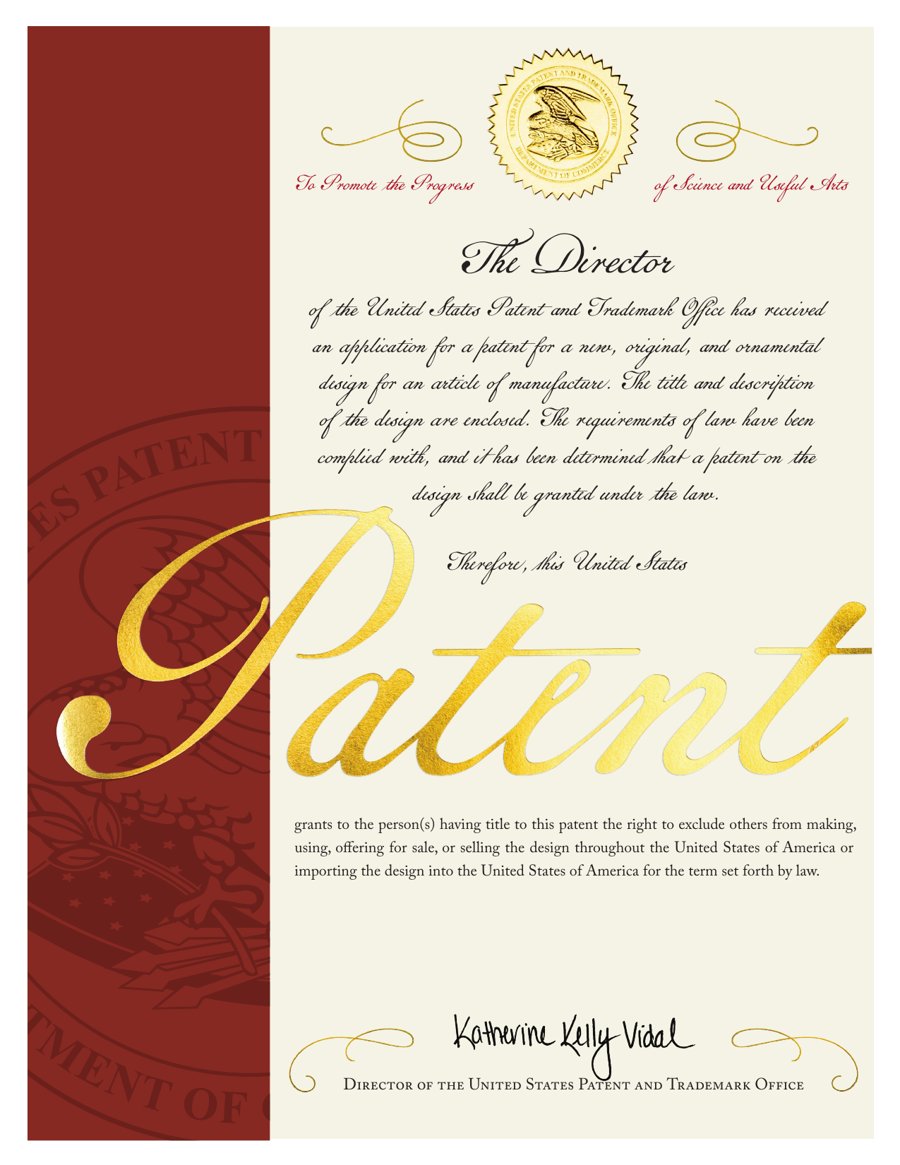
As of today, the Bloombox is a United States design patent: US D999,188 S, granted September 19, 2023. Two years ago I wrote about taking the bag apart on the day I filed. This post is about the document that came back.
The certificate says it plainly: it grants “the right to exclude others from making, using, offering for sale, or selling the design” in the US, or importing it, for the term set by law. The rest of the document is the patent itself.
A design patent’s front page looks dense, but almost every line on it is labelled with a small number in parentheses. Those are standard field codes, the same on every patent in the world, so I’ll go through mine in that order.
(54) SPEAKER
The title is one word. A design patent names the article the design is applied to, not the clever thing about it. So it isn’t “wearable acoustic backpack” or “blossoming chamber”. It’s a speaker.
(22) Filed, (45) granted
| (21) Application no. | 29/805,185 (the 29 series is design applications) |
| (22) Filed | August 25, 2021 |
| (45) Granted | September 19, 2023 |
| Time in between | 755 days |
Two years and 25 days, most of it waiting in the queue for an examiner. Nothing about the bag changed in that time. The design was fixed on the day it was filed.
(57) The claim
A utility patent can run to dozens of claims written in careful legal prose. A design patent gets exactly one, and mine reads, in full:
The ornamental design for a speaker, as shown and described.
“As shown” is the whole point. The drawings are the claim. Whatever the figures show in solid lines is what’s protected, which is why a design patent is mostly pictures: one claim, 23 drawing sheets.
The 24 figures
The drawings come in three sets of eight:
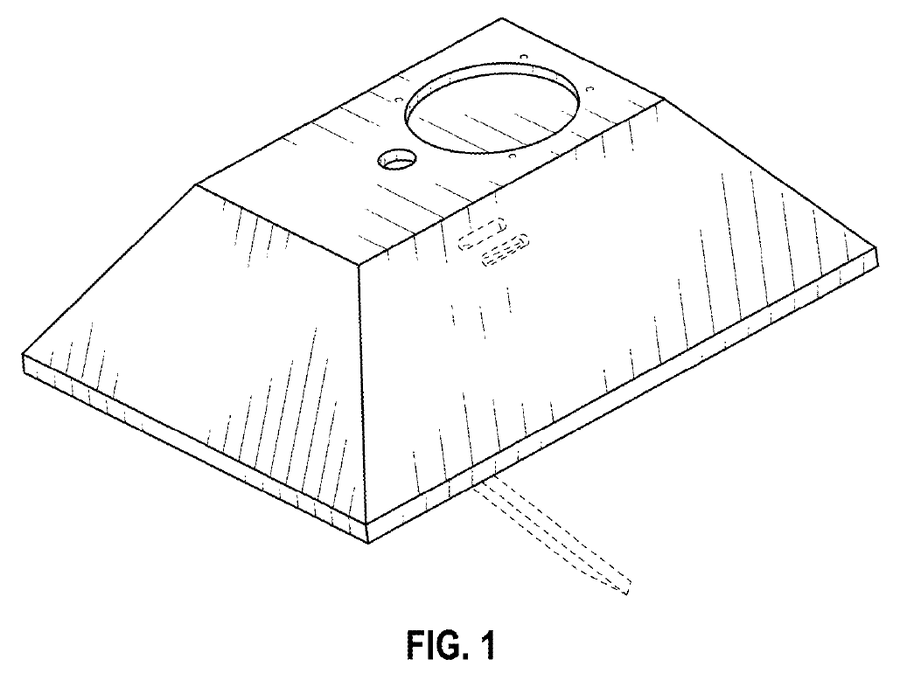
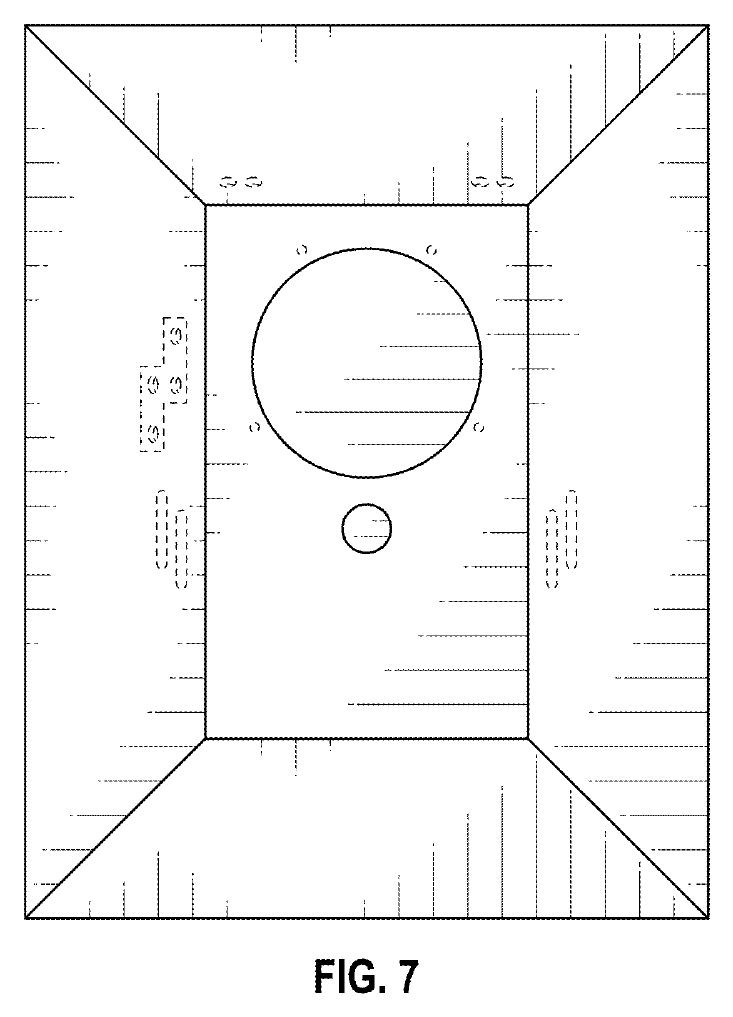
- FIGs. 1–8: closed. Two perspectives plus the six standard views: top, bottom, both sides, front and back.
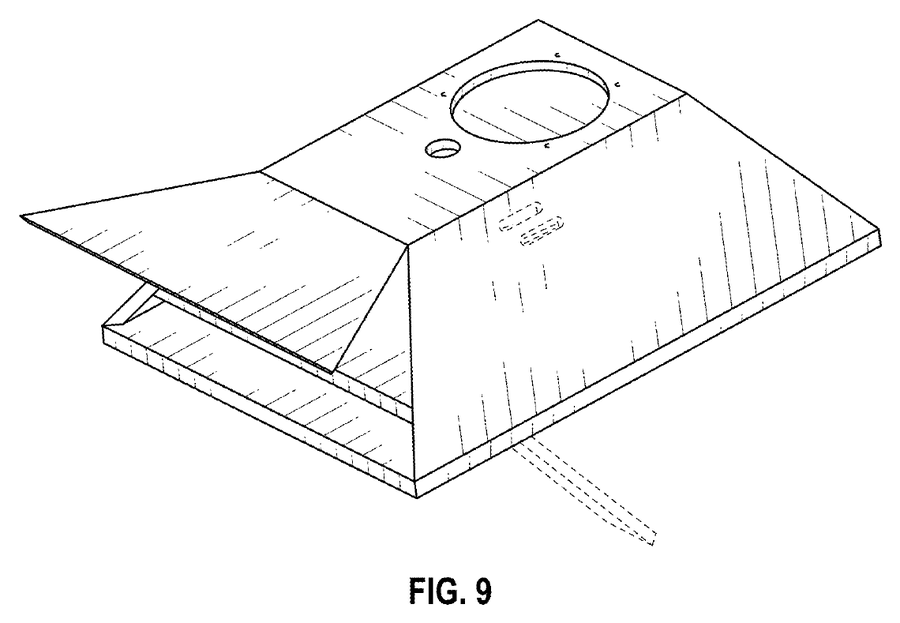
- FIGs. 9–16: lid open. The same views again with the compartment lid up, because the open state is part of the design too.
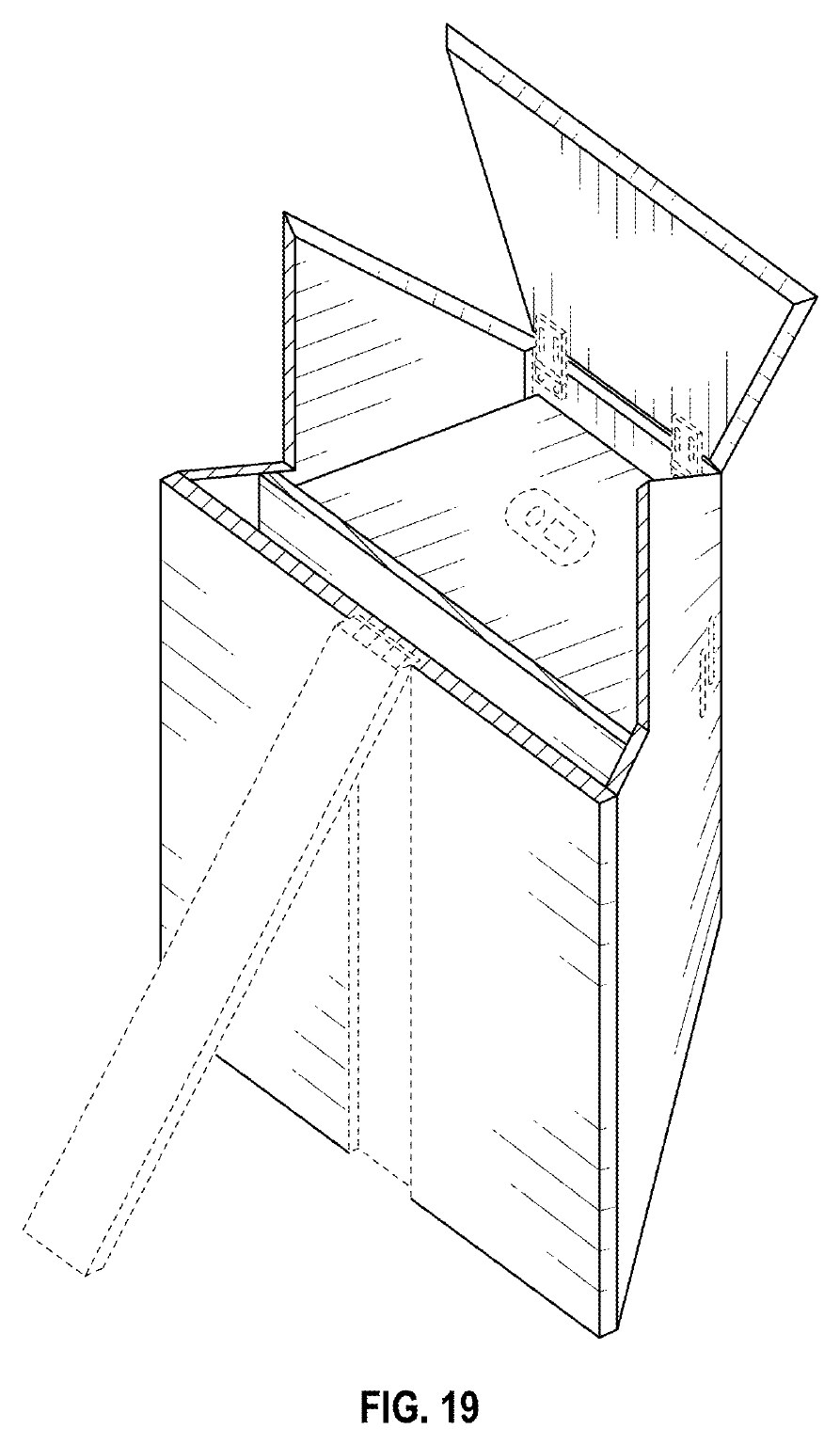
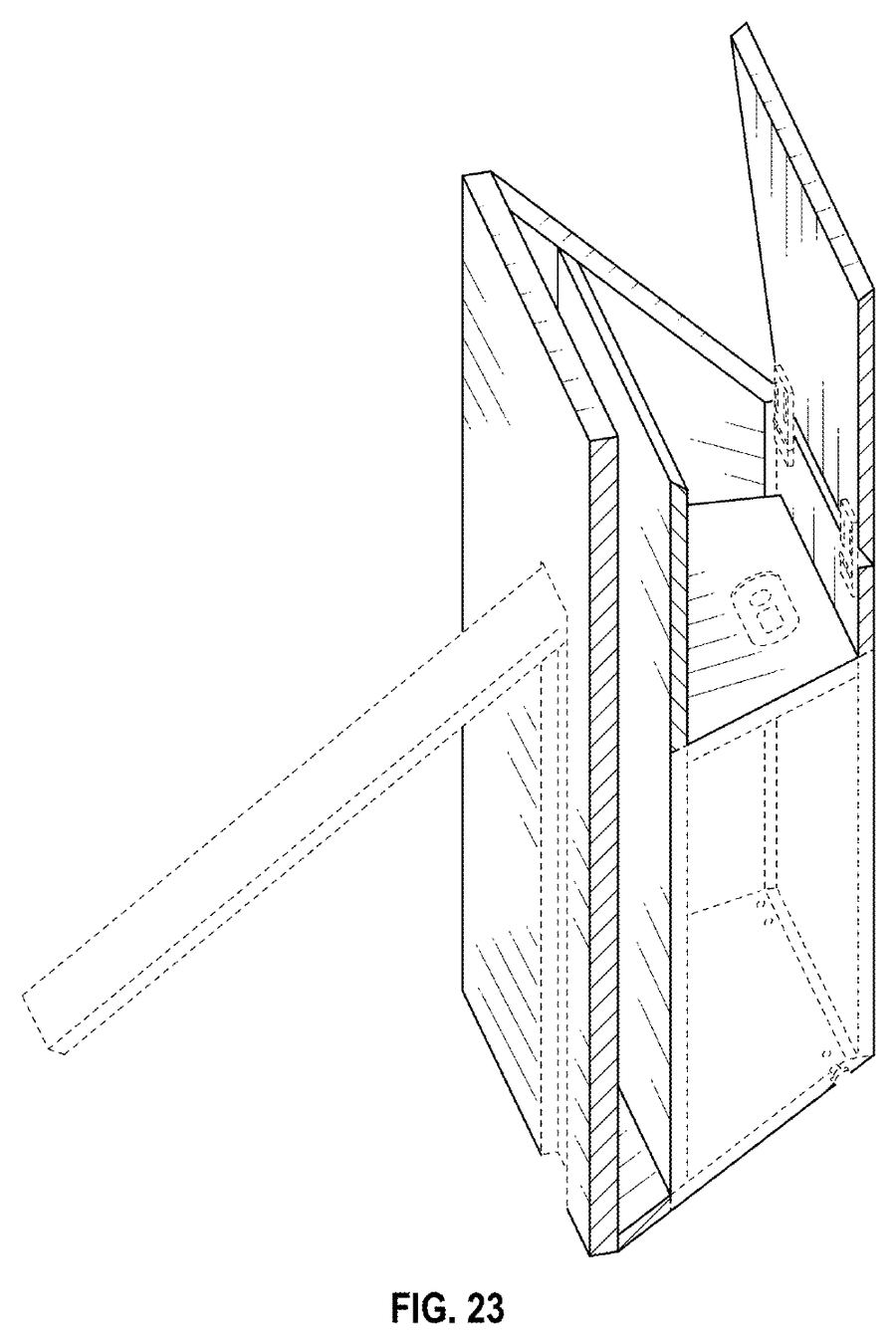
- FIGs. 17–24: cross-sections. The box sliced open to show the inside.
The dashed lines
On page two there’s one sentence that matters as much as the claim:
The broken lines in the figures illustrate the portions of the speaker that form no part of the claimed design.
Look closely at the drawings and some features are dashed instead of solid: the kickstand folding out underneath, the exit slots and the Tetris-shaped button cutout on the sides, and small hardware details. Those are shown for context but deliberately left out of the claim.
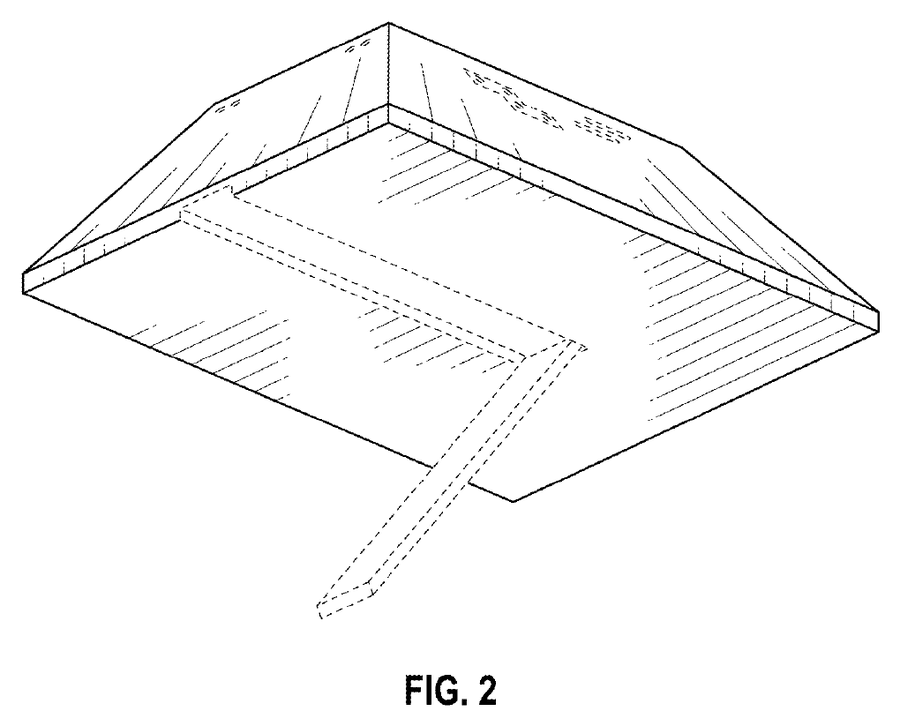
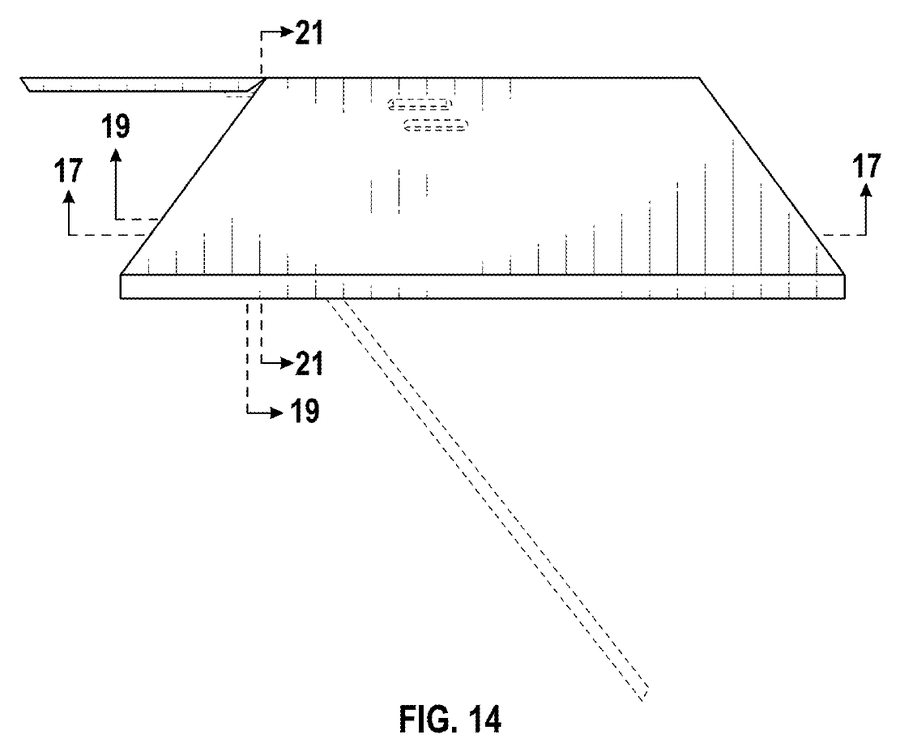
This is the most useful thing I learned in the process. Everything in solid lines is part of what a copy has to resemble, so a design claim gets stronger by showing less. Leaving the kickstand, slots and buttons out means the protected design is the shape itself: the mitered frame, the angled walls and the speaker openings. The details I’m most likely to change in a future version can change without stepping outside the patent.
Inside: FIGs. 17–24
The last eight figures are cross-sections. Each pair is cut along a line marked on another drawing, three of them on FIG. 14 and one on FIG. 11, and shows the cut once in perspective and once straight on. These are the drawings that show the inside of the design, where the chamber lives.
(56) References cited
The examiner compared the application against earlier designs and listed eleven on the patent, from a 1996 design to one granted in 2022. Most sit in the same class as mine, D14/204: the US design class for speakers.
| Patent | Year | Inventor |
|---|---|---|
| D372,243 | 1996 | Thorley |
| D456,938 | 2002 | Wardenburg |
| D544,987 | 2007 | Hargreaves |
| D552,081 | 2007 | Yano |
| D724,057 | 2015 | Kim |
| D725,819 | 2015 | Reynolds |
| D786,789 | 2017 | Jordan |
| D849,302 | 2019 | Sonneman |
| D894,148 | 2020 | Li |
| D916,045 | 2021 | Wu |
| D955,360 | 2022 | Slaatto |
Being granted over that list is the real result. It means the shape was new enough, next to everything the examiner found, to earn its own patent.
On the record
- Patent: US D999,188 S, “Speaker” · full document (PDF, USPTO)
- Inventor: Jack Allan Kasbeer
- Attorney: Greenberg Traurig, LLP
- Primary examiner: Janice Patyk
- Classification: LOC 14-01 · USPC D14/204
Drawings from US D999,188 S.